
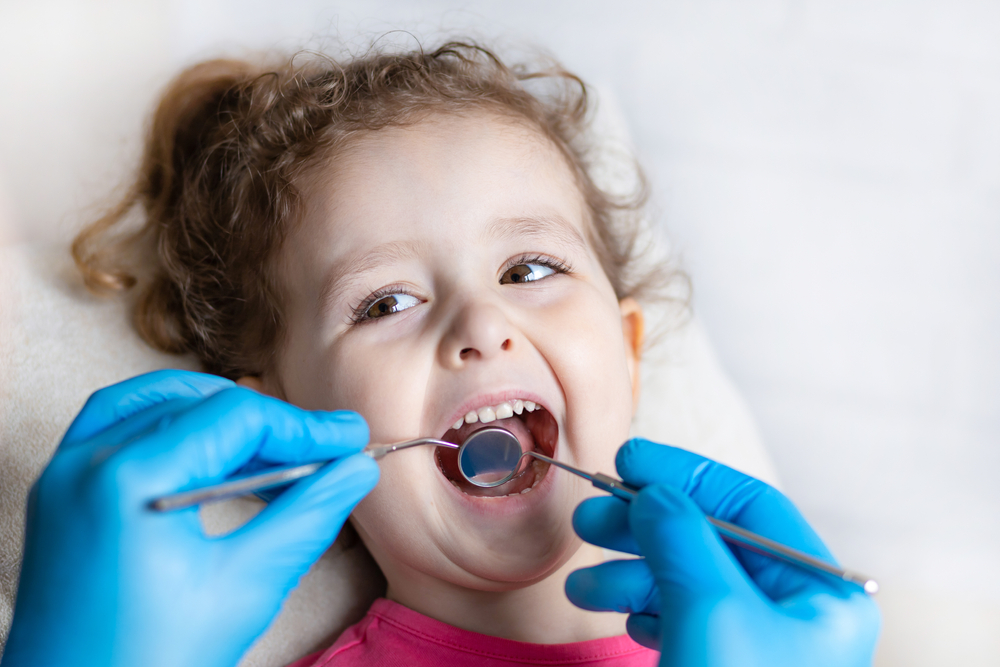
Did you know that baby teeth can get cavities just like permanent teeth? Even though they do eventually fall out, it is still important to protect them from decay. Cavities form when bacteria turn sugars from food and drinks into acid, which then eats away at enamel and can possibly lead to serious trouble. If left untreated, cavities can cause pain, difficulty eating and speaking, and even infections that spread beyond the mouth.
How to Spot a Cavity
Cavities aren’t always obvious at first, but early signs may include:
✔ White, chalky spots on teeth
✔ Fussiness or preferring one side or the other when eating or drinking
✔ Visible holes, pits, or dark spots
Some children may not show any symptoms at all, which is why it’s important to schedule a dental check-up after their first tooth appears, but before their first birthday.
Caring for Baby Teeth
1. Keep Their Mouth Clean
Before teeth come in, gently wipe your baby’s gums with a moist cloth after each feeding.
Once teeth appear, brush twice daily with a child-sized toothbrush and a smear of fluoride toothpaste (about the size of a grain of rice).
Floss between teeth that touch once a day.
2. Watch Their Diet
Avoid sugary drinks like juice and soda. The American Academy of Pediatric Dentistry recommends no juice in the first year and a limit of 4 ounces per day for ages 1–3.
Choose fluoridated water to help strengthen enamel. Many communities have fluoridated tap water, but if you use bottled water, check the label.
Avoid prolonged bottle or sippy cup use with anything but water, especially at bedtime.
Limit frequent snacking as much as possible. Try to consume food mostly at mealtimes to avoid excessive exposure to the teeth. Cookies and crackers, even if they don’t taste “sweet,” still contain sugars and should be limited as an occasional treat.
Healthy Habits for a Healthy Smile
By keeping your baby’s teeth clean, providing a healthy diet, and scheduling regular dental visits, you can help prevent cavities and set the foundation for a lifetime of good oral health. Start early, and your child’s smile will thank you!